

Is It a Bad Alternator or a Bad Battery?
Most drivers assume a dead car means a dead battery. The signs of a bad alternator vs. a bad battery often look the same, and misreading them means replacing the wrong part.
What sets them apart is timing. Battery problems tend to surface when you try to start the car. Alternator problems tend to appear once the engine is already running, and knowing which is which gets you to the right repair faster.
Signs Your Battery Is Bad
Your battery's job is to deliver a single burst of power when you turn the key. Once the engine starts, the alternator takes over. That's why battery trouble typically shows up at startup, not while you're driving.
Slow or Labored Cranking
The engine turns over more slowly than normal, making a low, dragging sound. The battery no longer has enough charge to spin the starter motor at full speed.
Rapid Clicking or Complete Silence at Startup
A fast clicking noise means the battery has barely enough power to trigger the solenoid but not enough to engage the starter. No sound at all means the battery is completely drained.
Visible Corrosion or Swelling on the Case
Heavy white or blue buildup at the terminals, or a case that looks swollen or warped, is a physical warning sign. Both are common in aging batteries and signal the battery no longer holds a reliable charge.
Battery testing is quick, and a voltage check confirms the problem before you commit to a repair.
Signs Your Alternator Is Bad
The alternator generates power while the engine runs, keeping the battery topped off and supplying electricity to every system in your car. When the alternator starts to fail, output drops and your electrical systems respond first. The symptoms below typically show up while you're already driving, not when you try to start.
Battery Warning Light Stays on While Driving
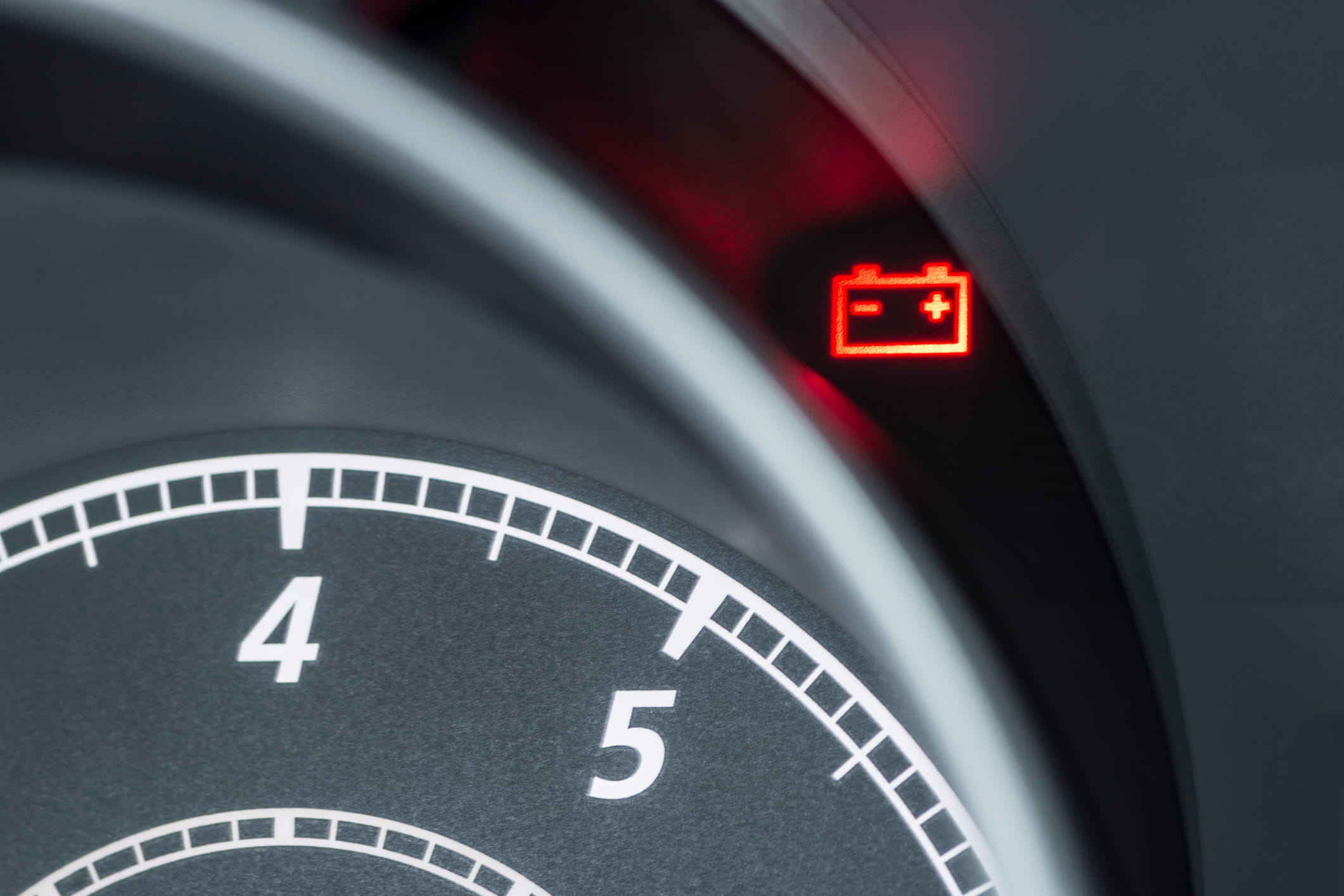
The battery light on your dashboard signals a problem with the charging system, not always the battery itself. When the alternator fails to maintain system voltage, this light stays on even after the car starts normally.
Headlights or Interior Lights Dim or Flicker While the Engine Runs
Your alternator powers the lights while the car runs. When output drops, the lights respond immediately, flickering at idle or dimming when you add electrical load like the A/C or rear defrost.
Electrical Accessories Acting Erratically
The radio resets, the power windows move slowly, or the A/C runs weaker than usual. These are signs the alternator isn't supplying consistent power to your car's systems.
An erratic electrical system or a warning light while driving warrants prompt attention. Alternators tend to fail quickly once the symptoms appear.
One Test That Tells You Which Problem You Have
Jump-starting your car does more than get you moving again. The response after you disconnect the jumper cables reveals a lot about which part is failing.
If the car stays running, the alternator is generating adequate power and the battery is the likely issue. The battery lacked the charge to start, but the alternator is handling the rest.
If the car starts but dies within a few minutes, the alternator is failing. Without adequate output, the battery drains quickly even with the engine running, and no jump start holds.
Neither result is a final diagnosis, but this test points you in the right direction. A trained technician confirms the exact problem with a battery load test or a charging system voltage check.
Start with a courtesy inspection at Christian Brothers Automotive. Our team tests both the battery and charging system to give you a clear answer before any repair recommendation. Find your local shop to get started.
Frequently Asked Questions
Does a Bad Alternator Damage a Good Battery?
Yes. A failing alternator damages a good battery in two ways. An undercharging alternator keeps the battery in a constant state of depletion, shortening its lifespan.
An overcharging alternator pushes excess voltage through the cells and causes heat damage. Addressing the alternator quickly protects your battery from premature failure.
If My Car Starts after a Jump but Keeps Dying, What Does That Mean?
That pattern points to a failing alternator. When the car starts from the jump but won't stay running, the alternator isn't generating enough power to keep the electrical system going. Without adequate input from the alternator, the battery drains quickly and the car stalls. A technician confirms this with a charging system test.
[1].jpg "Four Common Services Offered at Auto Repair Centers")
[2].jpg "Make Sure You're Getting Quality Auto Parts")