

TPMS Light On? Here's What It Means and What to Do Next.
Key Takeaways
- A TPMS light usually means one or more tires are underinflated, and checking tire pressure right away helps prevent unsafe driving and tire damage.
- A solid TPMS light usually points to low tire pressure, while a flashing light usually points to a sensor, battery, or system fault.
- Cold weather, slow leaks, overinflation, recent tire service, and failing TPMS sensors are the most common reasons the warning light turns on.
- Most TPMS issues start with a simple pressure check, but if the light stays on after inflation and driving, your vehicle likely needs a diagnostic and relearn procedure.
That small horseshoe-shaped icon with an exclamation point on your dashboard is your tire pressure monitoring system (TPMS) light, and it stops more drivers cold than almost any other dashboard warning.
At Christian Brothers Automotive, our technicians diagnose TPMS issues every day, and we want you to know exactly what to do when yours turns on. Most of the time, the fix is simpler than you think.
What Does the TPMS Light Mean?
Your tire pressure monitoring system (TPMS) tracks the air pressure in each tire and alerts you when something is off. When one or more tires drop too low, the system triggers that warning light on your dashboard.
Think of it as your vehicle's way of flagging a tire issue before it turns into a flat tire, a blowout, or an unsafe drive.
Can You Drive with the TPMS Light On?
Short-distance driving on a low tire to reach a safe location or a nearby service station is usually acceptable, but extended driving on an underinflated tire creates a real safety risk.
According to the NHTSA, there are nearly 11,000 tire-related motor vehicle crashes in the U.S. each year, underscoring the importance of proper tire maintenance. Underinflated tires also reduce your vehicle’s fuel economy and can shorten tire life, costing you more over time.
Solid vs. Flashing TPMS Light: What Each One Means
A solid TPMS light and a flashing TPMS light point to two different problems, and treating them the same way leads to the wrong repair.
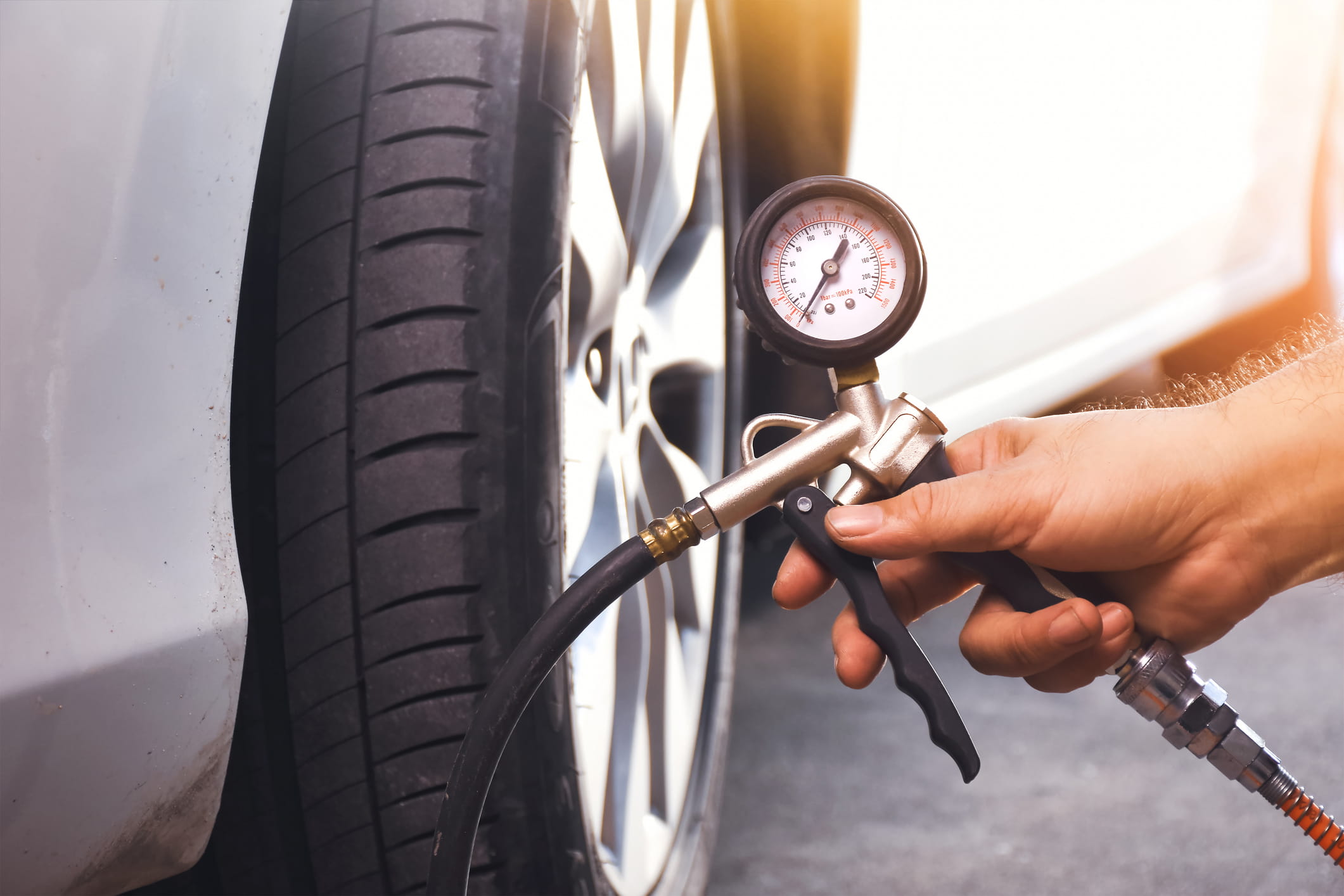
A solid TPMS light means one or more tires are underinflated. Check your tire pressure with a manual gauge right away and inflate each tire to the PSI listed on the sticker inside your driver's door jamb or in your owner's manual. On most vehicles, the light resets automatically after driving above 50 mph for 10 minutes once pressure is corrected.
A TPMS light that flashes for 60 to 90 seconds and then stays solid points to a system fault. This tells you the problem goes beyond low pressure. A failed or dying TPMS sensor, a depleted battery, or a relearn error after recent tire service is the more likely cause. At this point, a diagnostic scan is the right next step.
Common Reasons Your Tire Pressure Light Comes On
Temperature changes are among the most overlooked triggers of a TPMS warning light. For every 10-degree Fahrenheit drop in outside temperature, tire pressure falls by roughly 1 PSI.
A tire sitting at 33 PSI on a warm afternoon drops to 30 PSI overnight in cold weather, which crosses the alert threshold for many vehicles.
Here are the most frequent causes aside from weather changes:
- Slow leaks from a nail, damaged valve stem, or cracked alloy wheel allow air to bleed out gradually and bring pressure below the sensor threshold.
- Overinflation after a quick fill-up at a gas station pushes PSI above the safe operating range and activates the light just as low pressure does.
- Recent tire service, such as a rotation, new tire installation, or spare tire swap, disrupts the TPMS relearn cycle and produces a fault code until the system recalibrates.
- Sensor battery depletion ends a sensor's ability to transmit pressure data, with most TPMS sensor batteries lasting between five and ten years before replacement is needed.
Identifying the right cause before you start replacing parts saves time and money. A quick visual inspection of all four tires, along with a pressure gauge check, eliminates the most common causes in under five minutes.
Why Is Your TPMS Light On, but Your Tires Seem Fine?
If you check all four tires with a pressure gauge and every reading is within range, the TPMS light has another reason for staying on. A dead or failing TPMS sensor battery is the most common culprit, since the sensor stops transmitting data even though the tire itself is properly inflated.
Relearn errors after a tire rotation or new tire installation also produce false alerts because the system loses track of which sensor belongs to which wheel position.
Indirect TPMS systems, which rely on ABS wheel speed sensors rather than dedicated pressure sensors, generate false positives more frequently than direct TPMS systems. An OBD-II scan tool reads the stored fault code and identifies the exact sensor or module causing the alert.
What to Do When Your TPMS Warning Light Comes On
When your TPMS light activates, a step-by-step response gets you to the right fix faster and keeps you safe in the process:
- Pull over safely and do a quick visual check of all four tires for obvious damage, sidewall bulging, or visible underinflation.
- Use a manual tire pressure gauge to check PSI on each tire, including the spare, if your vehicle monitors it.
- Inflate any underinflated tire to the PSI printed on the driver's door jamb sticker.
- Drive at highway speed for 10 minutes to prompt an automatic TPMS reset on most vehicles.
- If the light stays on after inflating and driving, schedule a TPMS diagnostic to check for sensor faults, relearn errors, or battery failure.
These five steps resolve the majority of TPMS alerts without a shop visit. When they don't, a technician with an OBD-II scanner pinpoints the issue within minutes.
How to Reset and Relearn Your TPMS System
After you correct your tire pressure, most vehicles reset the TPMS warning light automatically during normal driving. If the light stays on after inflation, your vehicle's TPMS system needs a manual reset or a relearn procedure to clear the fault code and sync each sensor back to its correct wheel position.
The right reset method depends on your vehicle, but these are the three most common approaches:
Drive Cycle Reset
The drive cycle reset turns the TPMS light off on most vehicles after you drive above 50 mph for 10 minutes with all tires properly inflated. This gives the system time to read each sensor and confirm the pressure is within the proper range.
Reset Button Procedure
The reset button procedure starts with finding the TPMS reset button, which usually sits beneath the steering column or inside the glove box. Hold the button until the TPMS light blinks three times, then drive for up to 20 minutes to finish the relearn cycle.
OBD-II Diagnostic Scan
An OBD-II diagnostic scan reads the stored fault code from your vehicle’s ECU when the TPMS light stays on after a reset attempt. This helps identify whether the problem is a faulty sensor, a dead sensor battery, or a system communication error that a drive cycle will not clear.
What Happens if None of These Work?
If none of these steps turn off the TPMS warning light, a failing or dead sensor is the most likely cause. Sensor batteries are not replaceable on their own, so a sensor showing a battery fault needs a full sensor replacement followed by a shop relearn procedure to restore accurate readings.
Christian Brothers Automotive Can Help You Fix Your Tire Pressure Light
When your TPMS light turns on, the courtesy inspection at Christian Brothers Automotive is the right place to start. Our ASE-certified technicians check your tire pressure, inspect each sensor, and identify exactly what triggered the alert so you leave with a clear answer, not a guess.
From there, we handle whatever your tires need, whether that's a sensor replacement, a relearn calibration, a rotation, or a simple pressure adjustment. It’s how we drive joy.
Find your nearest Christian Brothers Automotive location and schedule your visit today.
[1].jpg "Four Common Services Offered at Auto Repair Centers")
[2].jpg "Make Sure You're Getting Quality Auto Parts")
sunwash-tech-with-customer.png "What is a Car Inspection?")