
Is Your Car Leaking Oil? Here’s What You Should Know.
An oil leak—even a few drops on the driveway—is your engine’s way of signaling a problem. What starts as a minor seepage can quickly become a significant safety risk or a costly repair if left unaddressed.
Identifying the "why" behind the leak is essential for avoiding long-term damage and keeping your car on the road. This guide from Christian Brothers Automotive breaks down the common causes and solutions to help you navigate from uncertainty to a clear plan of action.
Don’t Ignore These Signs of an Oil Leak
An engine oil leak shows itself in several ways before major damage occurs. Watch for these warning signs:
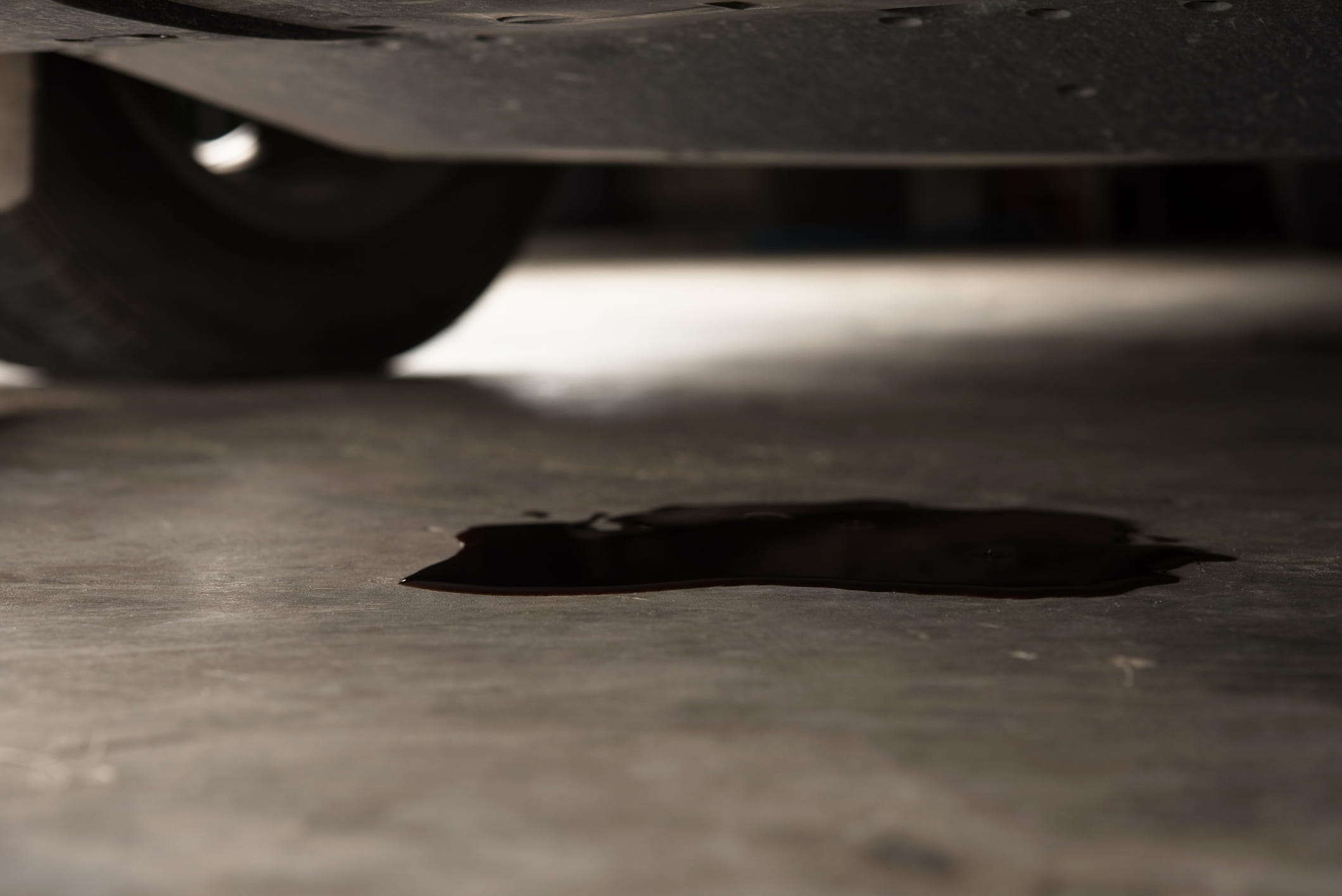
- Dark Puddles Under Your Car: Fresh oil appears amber or light brown, while older oil looks dark brown or black on your driveway or parking spot.
- Burning Oil Smell: Leaking oil hits hot engine components and creates a distinct burnt odor while driving.
- Blue Smoke From the Exhaust: Oil burning inside the engine produces visible smoke.
- Low Oil Level: Your dipstick shows oil levels dropping faster than normal between oil changes
- Dashboard Warning Lights: The oil pressure light or check engine light illuminates when levels drop too low.
Finding a car leaking oil when parked means you need professional inspection soon. The longer oil seeps from your engine, the more damage accumulates.
How Serious Is an Oil Leak?
An oil leak in your internal combustion engine demands immediate attention, as motor oil is the primary lubricant that prevents friction between moving parts. Every drop of lost fluid reduces protection for the crankshaft, pistons, and bearings, leading to overheating, component warping, and complete engine failure.
Beyond mechanical damage, oil leaks create significant safety hazards. Oil dripping onto hot exhaust components can ignite engine fires. Leaking oil also contaminates the environment, harms local water supplies, and leaves slippery spots on asphalt where other drivers lose traction. Fixing an oil leak protects your vehicle's longevity, your personal safety, and your community.
Can You Drive with an Oil Leak?
The answer depends on how much oil you're losing and how fast.
A few drops overnight while parked poses less immediate risk than a steady stream while driving. Check your oil level with the dipstick before starting the engine.
If your oil level is above the minimum mark and no warning lights are on, you may drive short distances to reach a repair shop. Monitor the gauge constantly and recheck oil levels every few miles, as you’ll need to add oil as needed to maintain proper levels during transit.
Never drive when the oil pressure warning light illuminates or when you see large puddles forming quickly. These signs indicate severe leaks where continued operation destroys your engine within minutes. Pull over safely, shut off the engine, and arrange for towing to a repair facility.
Causes of an Oil Leak
Several components fail and allow oil to escape from your engine. Identifying the source helps mechanics provide accurate repairs.
Worn Gaskets and Seals
Gaskets and seals prevent oil from leaking where engine parts connect. Heat, pressure, and age cause these rubber components to crack, shrink, and lose flexibility. The valve cover gasket, oil pan gasket, and rear main seal are common failure points. When gaskets deteriorate, oil seeps through the gaps and drips onto surrounding components.
Oil Pan Damage
Your oil pan sits at the bottom of the engine and holds the oil supply. Road debris, speed bumps, and rough terrain damage this metal pan. An oil pan leak often results from impact damage creating holes or cracks, or from a loose drain plug failing to seal properly. You'll notice a car leaving oil spots when parked after the pan sustains damage.
Faulty Oil Filter
The oil filter screws onto the engine and removes contaminants from circulating oil. A loose filter allows oil to escape around the threads. Over-tightening during installation crushes the gasket and creates gaps. Using the wrong filter size or forgetting to replace the old gasket when installing a new filter can also cause leaks.
Damaged Oil Drain Plug
The drain plug threads into the oil pan and gets removed during every oil change. Repeated removal strips the threads, causes warping, or damages the crush washer that seals the connection. Mechanics who overtighten drain plugs accelerate wear on these threads. A compromised drain plug lets oil drip directly from the pan.
Crankshaft Seal Failure
Front and rear crankshaft seals keep oil inside the engine where the crankshaft extends outward. High mileage, extreme temperatures, and normal wear cause these seals to harden and crack. Oil leaks from crankshaft seals often appear at the front or rear of the engine and leave puddles beneath your vehicle.
How to Fix an Oil Leak
Oil leak repair varies based on where the leak originates. Here's what each common repair involves:
- Valve Cover Gasket Replacement: Mechanics remove the valve cover, clean mating surfaces, and install a new gasket to seal the connection between the cover and cylinder head
- Oil Pan Gasket or Pan Replacement: The repair requires draining oil, removing the oil pan, replacing the gasket or damaged pan, and refilling with fresh oil
- Oil Filter Correction: Technicians remove the improperly installed filter, clean the mounting surface, install the correct filter with a new gasket, and tighten to proper specifications
- Drain Plug Repair: Mechanics replace the drain plug and crush washer, or repair stripped threads using specialized inserts before installing a new plug
- Crankshaft Seal Replacement: This labor-intensive repair involves removing connected components (like the timing belt or transmission) to access and replace the damaged seal
Attempting DIY repairs on an oil leak in the engine often leads to bigger problems. Modern engines require specific torque specifications, proper sealant application, and component alignment. Professional technicians have the tools and training to complete repairs correctly the first time.
How to Prevent Future Oil Leaks
Regular maintenance stops most oil leaks before they start. Follow your manufacturer's recommended oil change intervals, use the correct oil weight for your engine, and have gaskets and seals inspected during routine service.
Here are some recommended readings on how to take care of your car’s oil:
- What Happens If I Wait Too Long for an Oil Change?
- 10 Tips for a Successful Oil Change
- Busting Eight Myths About Motor Oil
Get Your Oil Leak Fixed at Christian Brothers Automotive
Oil leaks won't fix themselves, and waiting makes repairs more expensive. Our ASE-certified technicians diagnose the exact source of your oil leak and provide transparent repair estimates before starting any work. We use quality parts and proven repair techniques to stop leaks and protect your engine.
Schedule your oil leak inspection at your neighborhood’s Christian Brothers Automotive. We'll get you back on the road with confidence, driving with joy again.
[1].jpg "Four Common Services Offered at Auto Repair Centers")
[2].jpg "Make Sure You're Getting Quality Auto Parts")
sunwash-tech-with-customer.png "What is a Car Inspection?")