
Four Reasons Your ABS Light Is On
Key Takeaways
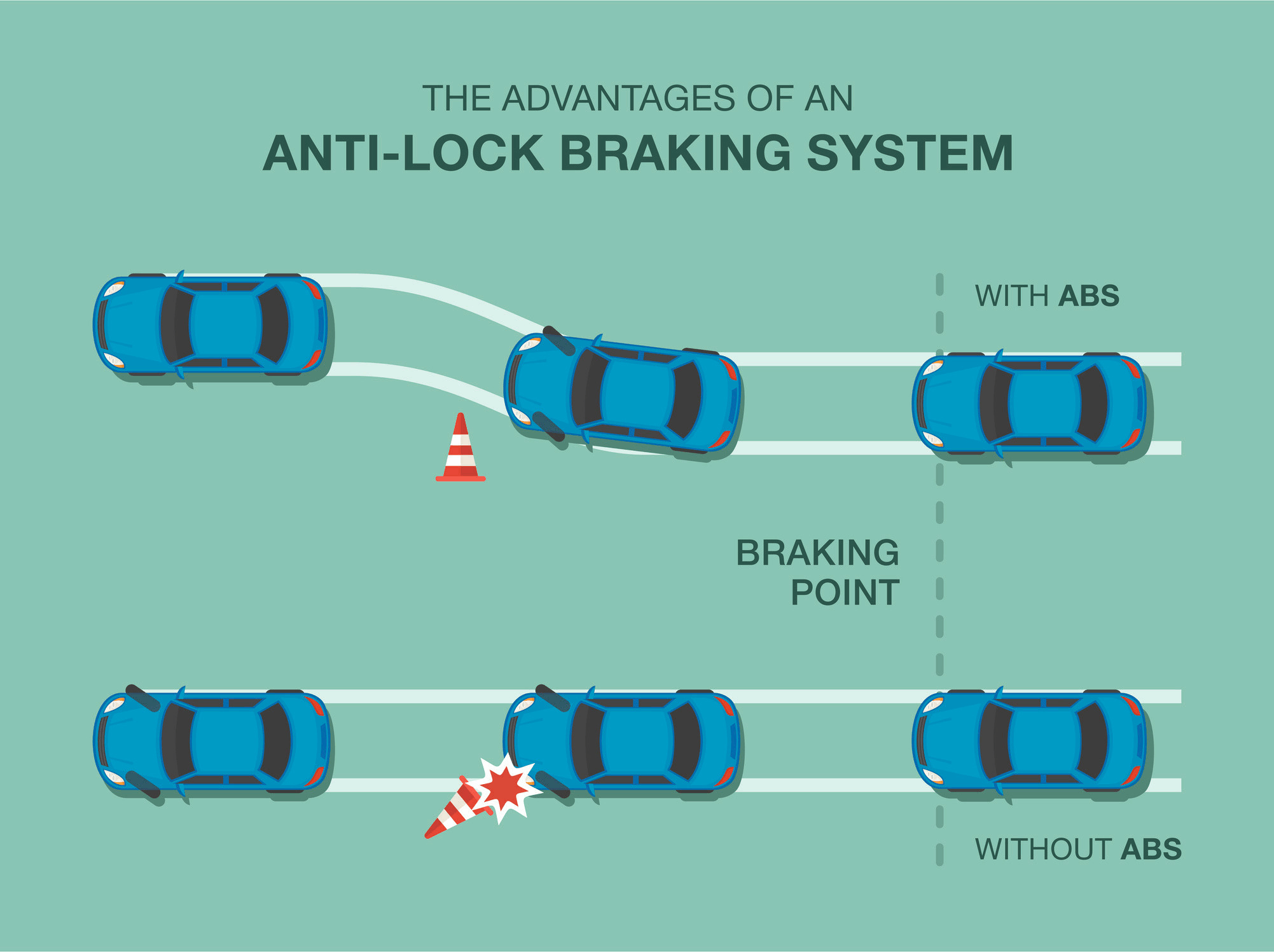
- An anti-lock brake system (ABS) prevents wheel lockup during hard braking, keeping your steering active so you avoid obstacles. It does not shorten the stopping distance.
- Four problems can trigger the ABS warning light: a malfunctioning ABS module, low brake fluid in the reservoir, a broken wheel speed sensor, or deactivated traction control settings.
- Your ABS and traction control system share a control module, so a fault in one system often activates the warning light for both.
- A lit ABS light means your anti-lock brake system is inactive. Short trips are possible, but a professional diagnostic should follow quickly.
What Is an Anti-lock Brake System?
An anti-lock brake system (ABS) is a hydraulic safety feature standard on all U.S. vehicles since 2012. It prevents your wheels from locking up during hard braking—or when you apply so much pressure that the wheels stop turning completely while the car is still in motion.
When your wheels stop turning but your car is still moving too fast, you start to skid, and skidding causes you to lose total control over your vehicle, which is a dangerous prospect when traveling at high speeds.
Contrary to popular belief, an anti-lock brake system doesn’t actually stop your car faster than a traditional brake system.
However, it does enable you to control your car, allowing you to possibly steer out of the way of an accident and avoid serious injury and damage to your car.
Likewise, it increases the lifespan of your tires, brake pads, brake calipers, wheels, and just about everything else on your car that braking can influence.
Four Reasons Your Anti-lock Brake System Light Can Come On
An ABS indicator light on your dashboard signals a fault in your anti-lock brake system, most commonly a broken wheel speed sensor, low brake fluid, or a malfunctioning ABS control module.
Malfunctioning ABS Module
Your ABS actually shares some important components with another system in your vehicle: your traction control system.
Traction control is a system designed to keep all four wheels on the ground rolling smoothly. If it detects that one wheel starts to spin irregularly, it will cut power to your engine until it regains stable traction. This is designed to prevent you from skidding out of control by accidentally applying too much power.
Both systems run through the same control module and self-diagnostic system, so a fault in one often triggers the other. Your ABS light might be triggered by a traction control issue, or the ABS system itself might be the source. Either way, a professional diagnostic will pinpoint the exact cause.
Low Levels in the Fluid Reservoir
Your brake system is hydraulic, which means it uses the force of a piston pressing against fluid to close your brake pads and bring your car to a stop. This means you need a consistent, constant level of fluid in your brake system.
However, if there’s a slow leak, then the amount of fluid will drop and your brakes won’t be able to operate properly. Your computer can usually detect this with sensors, and will turn the ABS light on if it finds it.
Broken Wheel Speed Sensors
Wheel speed sensors are devices that tell your computer how fast each wheel is turning. If the computer detects an anomaly in these speeds, then your traction control system makes adjustments or shifts power to different wheels to compensate.
If a speed sensor is dirty or stops working, then it can’t relay this information accurately. Rather than make a load of adjustments, it will usually disable your ABS and/or traction control systems until you either restart your vehicle or the problem gets resolved.
Deactivated Traction Control Settings
While you cannot manually turn off your ABS, most vehicles do allow you to disable the Traction Control System. Because these two systems share the same computer module, a setting change in one can sometimes be confusing on your dashboard.
If you see a light that says "TC Off" or shows a car with squiggly lines, you may have accidentally pressed the Traction Control button. Drivers often use this feature to gain momentum in deep snow or mud, but leaving it off during normal driving disables a key safety measure.
Get Professional Auto Service for Your Broken ABS System
If you have an ABS problem, the experienced auto repair experts at Christian Brothers Automotive can solve it! We service all types of brakes on all types of vehicles, from standard anti-lock brakes to high-performance systems in sports cars to large systems in heavy-duty vehicles.
When your ABS light comes on, we’re a team you can trust to accurately diagnose your problem and get it fixed with high-quality parts and labor backed up by certified technicians!
If you need a brake service or repair, find your local Christian Brothers Automotive.
Frequently Asked Questions About ABS Warning Lights
What causes the ABS light to come on and go off?
An ABS warning light that comes on and goes off intermittently usually points to a dirty or failing wheel speed sensor sending inconsistent signals to the ABS control module.
Road debris, brake dust, or corrosion on the sensor triggers the fault; once the system resets, the light clears until the next bad reading. A certified technician can clean or replace the affected sensor before the fault becomes permanent.
Will my car fail inspection with the ABS light on?
In states that require full safety inspections, such as Virginia and New York, a lit ABS warning light will result in an automatic failure. However, some states focus exclusively on emissions during their inspection process and may pass a vehicle even if the ABS light is active.
Check your state's Department of Motor Vehicles guidelines or ask an auto technician at your local shop to confirm the requirement in your area.
Is it okay to drive with an ABS light on?
You can drive short distances with an ABS warning light on, but your anti-lock brake system is inactive, meaning your wheels can lock up during hard braking. Your standard brakes still work, but you lose the steering control ABS provides at highway speeds or on wet roads.
Can I reset the ABS light myself?
While disconnecting the battery works on some older models, most modern cars require a professional scan tool to clear ABS codes. An OBD-II scanner reads the stored fault code before you clear it, so you know what triggered the light.
Without a diagnostic, resetting the light is temporary and leaves the ABS system inactive until the fault is resolved.
How do I fix my ABS light?
Fixing an ABS warning light starts with a professional diagnostic scan to read the stored fault code and identify the exact cause, whether that's a broken wheel speed sensor, low brake fluid, or a malfunctioning ABS control module.
A technician will clean or replace the faulty component, clear the fault code, and verify that the ABS system is operating correctly before returning your vehicle.
[1].jpg "Four Common Services Offered at Auto Repair Centers")
[2].jpg "Make Sure You're Getting Quality Auto Parts")
sunwash-tech-with-customer.png "What is a Car Inspection?")